
Rural Nevada CoC Point-In-Time Count
Each year, the Rural Nevada Continuum of Care (RNCoC) conducts a Point-in-Time (PIT) Count, a HUD-required snapshot of how many people are experiencing homelessness, sheltered and unsheltered, on a single night during the last 10 days of January. This date is selected as a statewide date, coordinated across all three CoCs in Nevada. This is done to minimize duplicate counts.
Count Night for 2026 is Thursday, January 29, 2026 (morning), starting at 4:00 AM.
Because Rural Nevada covers a large geography, accuracy depends on local knowledge, coordinated teams, and strong volunteer turnout across our towns, tribal areas, and remote regions.
On this page you can:
Learn why an accurate PIT Count matters
Access app + training materials (as they are posted)
Sign up to serve as a County Lead, Local Lead, or Volunteer
Download and share the volunteer flyer and media release
Questions? Email [email protected]
Table of Contents
Background: What the PIT Count is
The Point-in-Time (PIT) Count is a HUD-required snapshot of how many people are experiencing homelessness in Rural Nevada on a single night. It includes people staying in shelters and people staying outdoors or in places not meant for habitation, and it helps ensure our rural communities are represented in statewide and national data.
Why the PIT Count matters
In rural areas, undercounts happen easily, and undercounts have consequences. A strong PIT Count helps RNCoC and local partners plan services, identify gaps, and strengthen the data used in funding applications and system planning, it’s one of the clearest ways our communities can show what’s really happening on the ground.

Why The PIT Count Matters
The PIT Count is the only nationwide, HUD-mandated count of people experiencing homelessness on a single night, and HUD requires CoCs to complete the count following minimum standards and data quality expectations.
A thorough count helps RNCoC:
Demonstrate the true scale of need and protect our region from being under-resourced
Strengthen HUD reporting and CoC competition materials by ensuring our data reflects reality
Support local planning and smarter resource allocation across Rural Nevada’s communities
Download the one-pager for a deeper explanation of how PIT accuracy connects to funding and planning.
Get involved
This count is powered by local teams. Whether you can lead coordination in your county, support a specific town or community as a local lead, or volunteer for a few hours on Count Night, there’s a role for you, training and guidance are provided for every position.
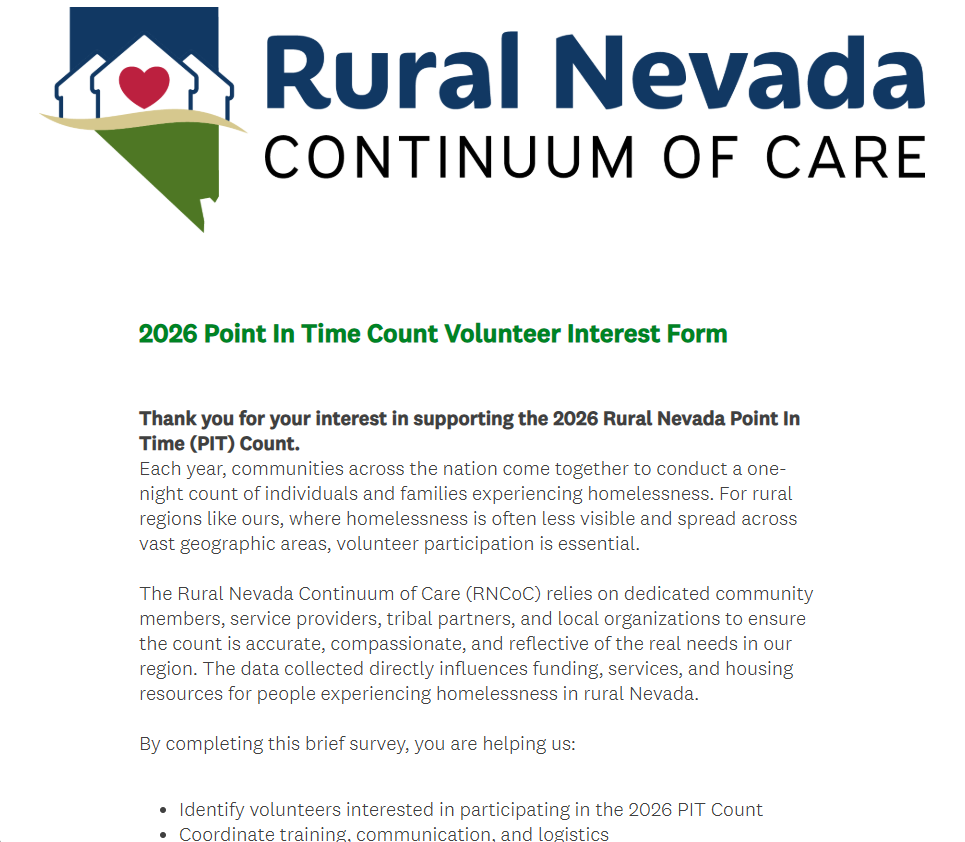
Point-In-Time Volunteer Sign-Up
Volunteers make the difference in a strong PIT Count. Teams visit shelters and outdoor locations where people may be staying, with training provided on survey steps, safety protocols, and HUD requirements.
If you sign up, you can expect:
A brief training/orientation before Count Night
Deployment in coordinated teams (often alongside outreach workers and people with lived experience)
Assignment details shared closer to the count (location/time depend on county planning)
Count Night: Thursday, January 29, 2026, starting at 4 am. The Count will focus on the sleeping locations of homeless individuals on the night of Wednesday, January 28, 2026, into Thursday, January 29, 2026.
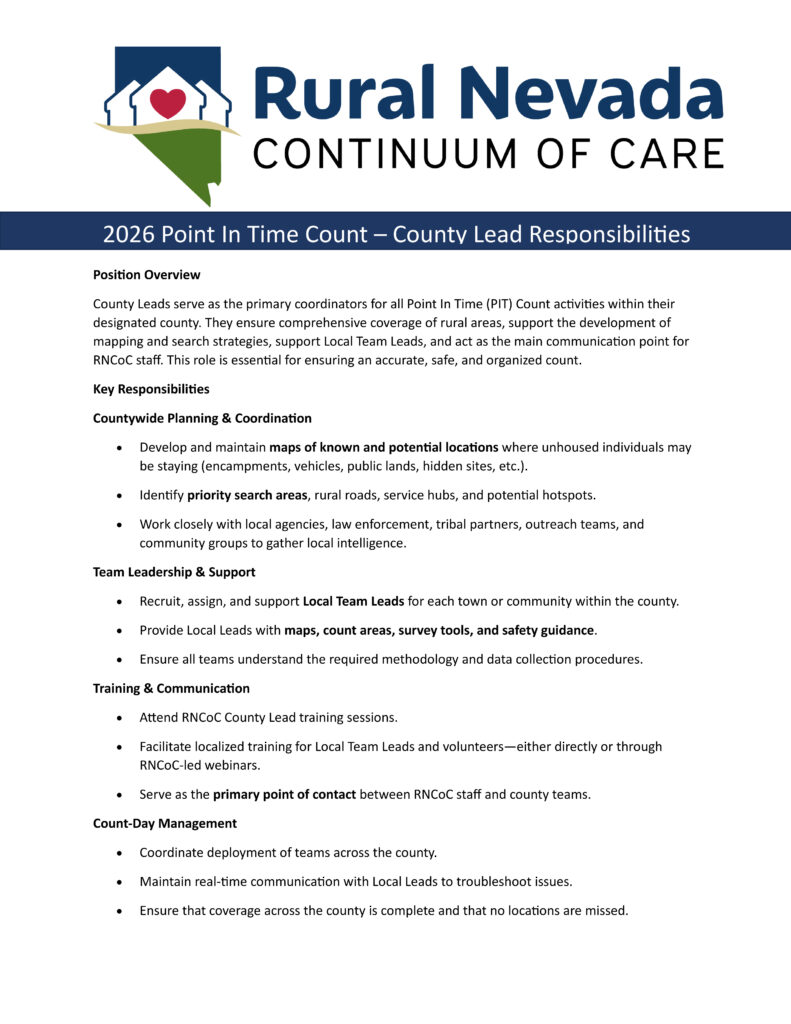
Point-In-Time County Lead Sign-Up
County Leads are the primary coordinators for PIT Count activities across an entire county, ensuring coverage of rural areas and supporting Local Leads.
County Leads typically:
Build maps and search strategies with local partners (including outreach, tribal partners, and community groups)
Recruit and support Local Leads, coordinate team deployment, and troubleshoot on Count Night
Participate in debrief/after-action review to strengthen future counts
Use the links below to review the role description and sign up.
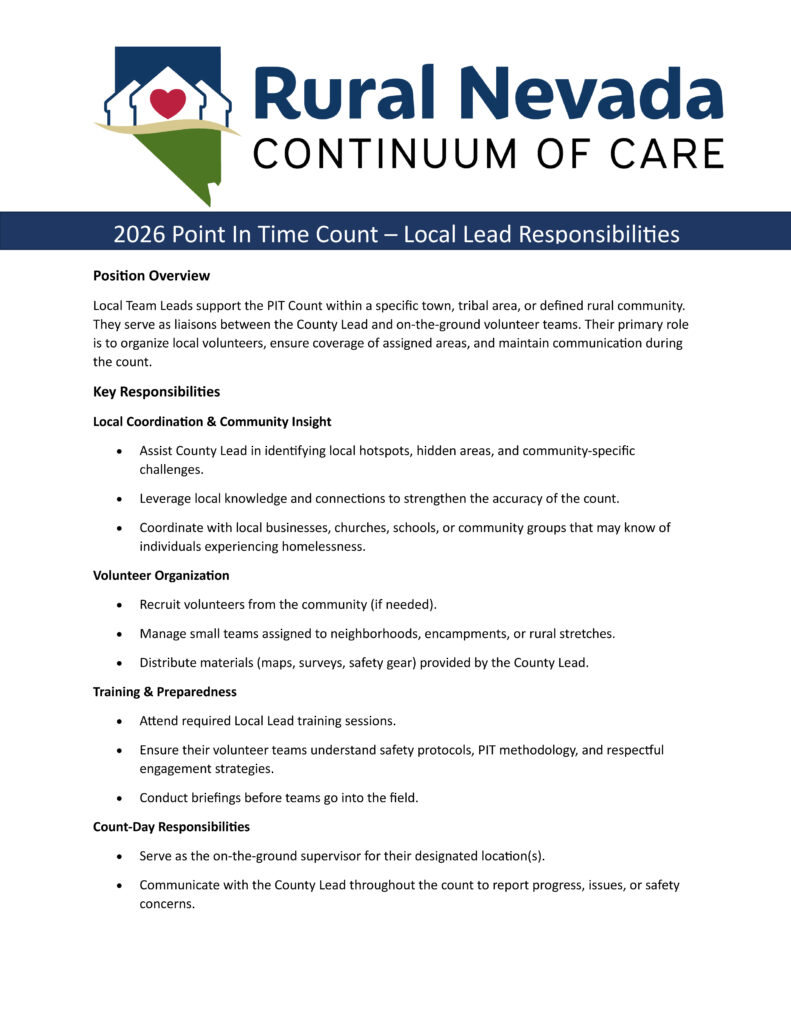
Point-In-Time Local Lead Sign-Up
Local Team Leads support the PIT Count in a specific town, tribal area, or defined rural community. They bridge “county-level coordination” and on-the-ground teams, helping ensure your community is fully covered.
Local Leads typically:
Help identify local hotspots and hard-to-find locations
Organize and brief volunteer teams, distribute materials, and reinforce safety protocols
Maintain communication during the count and return completed materials promptly
Use the links below to review the role description and sign up.
Training & Field Resources
We provide simple, practical training so you feel prepared and supported. Resources include volunteer orientation, app guidance, safety and privacy protocols, and day-of instructions, materials will be posted here as they are finalized.
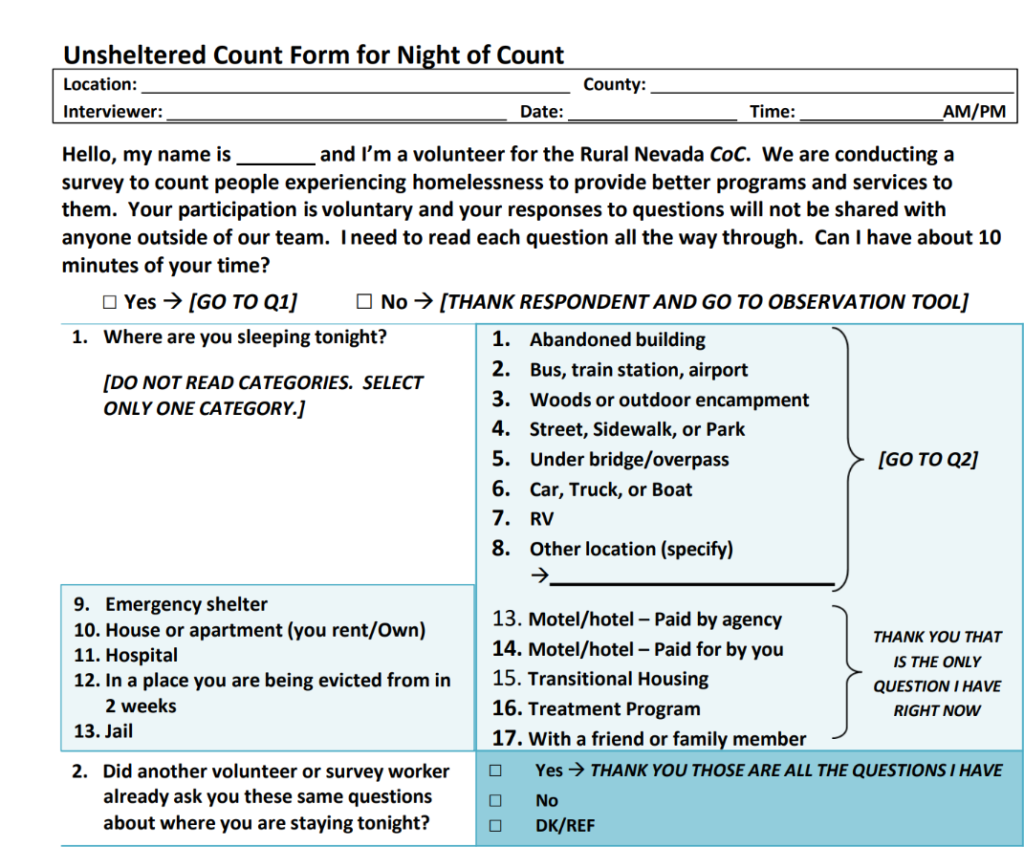

PIT Volunteer Training Video


Point-In-Time App Training Materials
RNCoC uses a mobile counting tool to support consistent, secure data collection in the field, and we also provide paper backups in areas with limited cell coverage.
Training materials will be posted here as they are finalized, including:
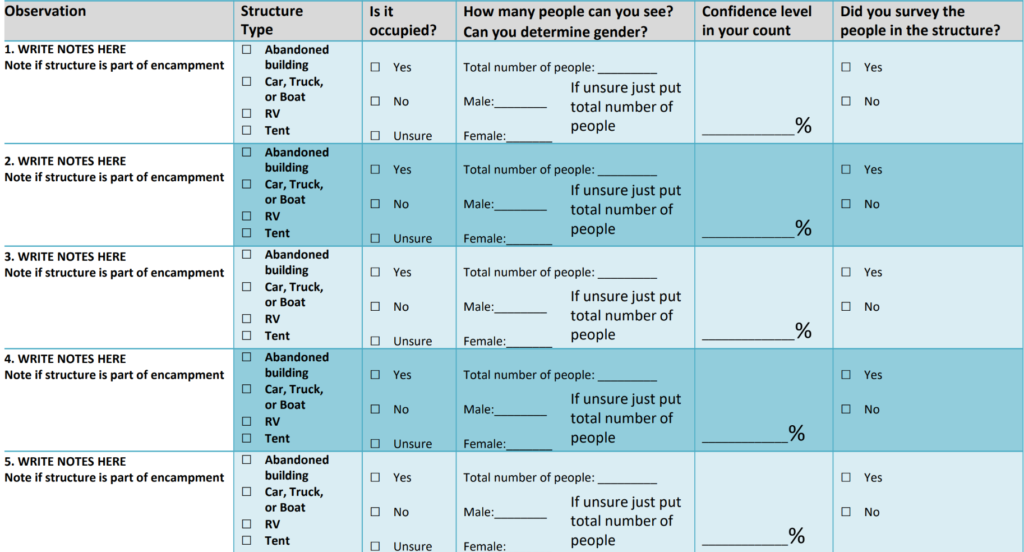
Volunteer orientation: what the PIT Count is, who is included, and what “Count Night” means
App walkthrough: downloading, logging in, completing an observation vs. survey, and syncing data
Safety + privacy protocols: respectful engagement, consent, and participant confidentiality
More
Census Designated Places & Cities/Towns in Rural Nevada
Rural Nevada has relatively few incorporated cities and towns, many communities are unincorporated and spread across large distances. To make sure those places are still represented in official geography, the U.S. Census Bureau uses Census-Designated Places (CDPs), these are statistical “place” boundaries created for describing where people live and where communities function.
For PIT Count activities, we use cities/towns and CDPs as practical planning units. They help county and local teams coordinate recruitment, define coverage areas, share meeting locations, map common service points, and organize volunteer routes on Count Night. A CDP is not a city government, it’s a Census geography that helps us name and plan around the places where people congregate.
Designated County Leads
Below you can find the county leads for this year’s PIT count.
- Carson City Christie Contreras Carson City Health and Human Services
- Churchill Jackee Stewart Churchill County Social Services
- Elko Tess Fairbanks Vitality Unlimited
- Humboldt Tapatha Yazzie Frontier Community Coalition
- Lander Dinora Caussor Frontier Community Coalition
- Lyon Rhiannon Baker Lyon County Human Services
- Lyon/Storey Nicole Lewis SSSHP
- Nye & Esmerelda Jessica Barlow Nevada Outreach Training Organization
- Pershing Gardenia Parra Frontier Community Coalition
Share + Media
Help us recruit a strong volunteer turnout across Rural Nevada. Use the flyer to share with community partners, employers, civic groups, and faith communities, and use the media release to support consistent messaging with local outlets.
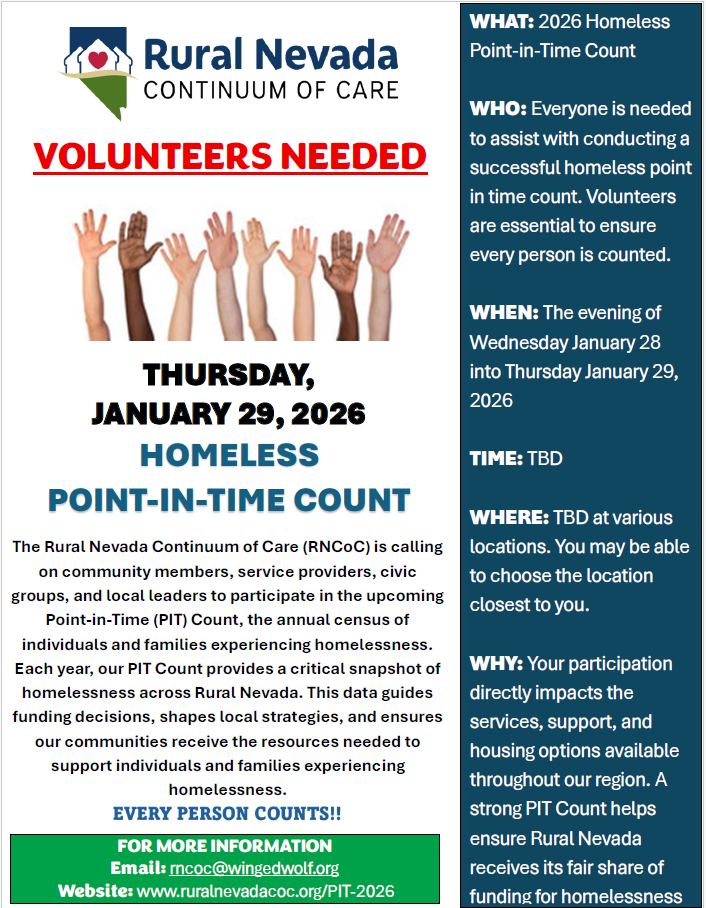
Point-In-Time Volunteer Flyer
Use this flyer to recruit volunteers and share PIT Count details with community partners, civic groups, businesses, and faith communities.
Download and share the flyer; it includes the 2026 Count Night date, contact email, and basic participation details.

Point-In-Time Count Media Release
This media release provides a public overview of the PIT Count, why it matters, and how to volunteer, including the date of the 2026 count.
If you’re part of a local organization or media outlet and want to help amplify recruitment, please use the release language and direct interested volunteers to the sign-up link on this page.
Frequently Asked Questions (FAQ)
What is the Point-in-Time (PIT) Count?
The PIT Count is a HUD-required snapshot of how many people are experiencing homelessness, both sheltered and unsheltered, on a single night during the last 10 days of January.
When is the 2026 PIT Count?
Count activities for 2026 begin Thursday, January 29, 2026, with teams starting as early as 4:00 AM. Your county team will share the exact meeting time and location for your assignment.
Why do all Nevada CoCs count on the same date?
Nevada’s CoCs coordinate on the same statewide date to help reduce the chance of duplicate counts across regions.
Who is included in the PIT Count?
The PIT Count includes people staying in shelters and people staying outdoors or in places not meant for habitation.
Do I need experience to volunteer?
No. Volunteers are provided orientation and guidance, including safety, privacy, respectful engagement, and how to complete surveys/observations.
What will I actually be doing as a volunteer?
Volunteers deploy in coordinated teams to help complete surveys and observations at shelters and in outdoor locations where people may be staying, your role depends on your county’s plan and team assignment.
How does RNCoC collect PIT Count information?
RNCoC uses Hyperion to support consistent data collection in the field, and we also provide paper backups in areas with limited cell coverage.
Does Hyperion work if I don’t have cell service?
Yes, Hyperion is designed to continue working offline after the first time it’s loaded on your phone, submissions automatically upload when service returns.
Is Hyperion secure, and who can see the data?
Hyperion is built so volunteers can only see basic info about the surveys they submitted, submission data is accessible to assigned administrators, and data is transmitted using TLS (encrypted in transit).
Will Hyperion collect a location?
Hyperion can capture the volunteer’s location with each submission so administrators can see where surveys are being completed for coordination and coverage.
Can Hyperion be used for the sheltered count too?
Yes. Hyperion supports both sheltered and unsheltered surveys, and it can sort sheltered data by emergency shelter, transitional housing, or safe haven.
What if my surveys aren’t uploading?
First, confirm the device is connected to the internet (cell data or Wi-Fi). If it still doesn’t upload, Hyperion includes a manual upload option from the survey history area, and there is an “escape hatch” option if needed for rare cases.
What if I don’t have a smartphone (or I’m not comfortable using one)?
That’s okay, we can provide alternatives in many areas (including paper backups where needed). Contact the PIT team and we’ll match you to a role that fits.
How do I sign up, and when will I get my assignment?
Use the sign-up links on this page (Volunteer, Local Lead, or County Lead). Assignments and meeting details are shared closer to Count Night based on county planning and volunteer availability.
Contact
Have questions about time commitments, safety, what to expect, or how teams are organized? Start with the FAQ below, and if you still need help, reach out and we’ll connect you with the right county point of contact.
Lorem ipsum dolor sit amet, consectetur adipiscing elit. Ut elit tellus, luctus nec ullamcorper mattis, pulvinar dapibus leo.